15 Days, 1,000 km Tested
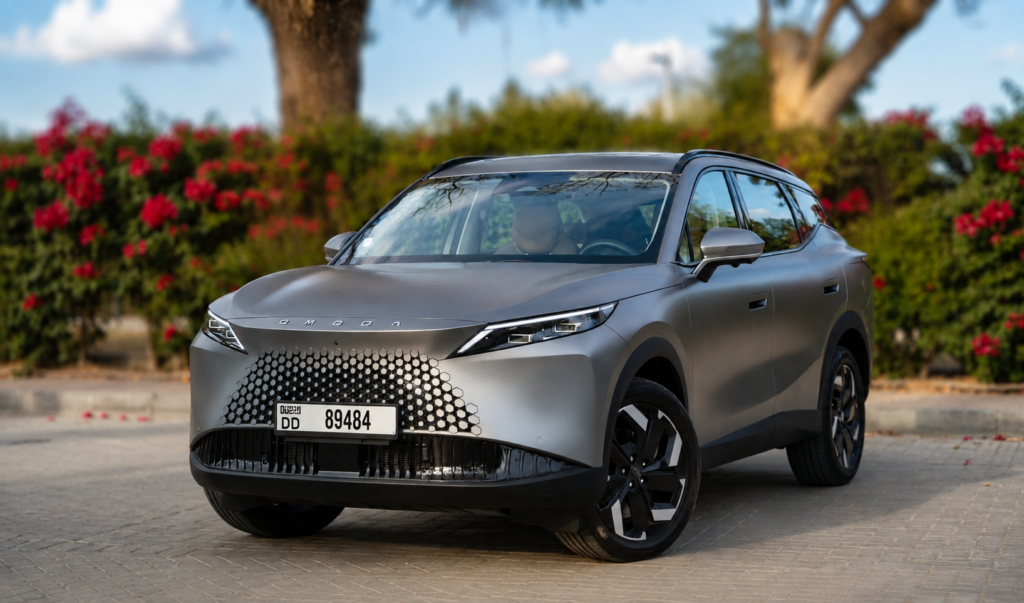
The second Chinese car I ever tested was always going to have the harder job.
The Jaecoo J8 SHS I had first got the benefit of surprise. I went in expecting to write something rather polite about how far these cars had come and ended up writing that the premium badges look overpriced.
So the Omoda C7 SHS arrived with a problem: the same parent company, Chery, with the same Super Hybrid System badge on the tailgate. A smaller car at a smaller price, and no surprise left to rely on.
Fifteen days and more than 1,000 kilometers later, across Dubai, Sharjah, and the run down to Abu Dhabi, solo and with a full car, here is where I landed: I liked the J8 more; I would buy the C7.
That said, it took me three days to get there.
Day one, and I nearly wrote it off
For some reason, I didn’t like this car from day one. Parked it the first evening, looked back at it once, and said to myself, “It’s going to be a boring and disappointing test drive experience.”
Thank God the loan was longer than usual. Most press cars come for two or three days, which is long enough to confirm a first impression and never long enough to correct one. I had this one for two weeks.
By the third day it had turned, and the turn was steep. Most of that was learning the car rather than the car changing. Which drive mode I actually wanted. Where the useful camera angles hide. How to stop the lane assist arguing with me on the way to work. Chinese cars ask more of you in the first week than a Toyota does, and they pay it back if you put the hours in.
What it is and what it costs
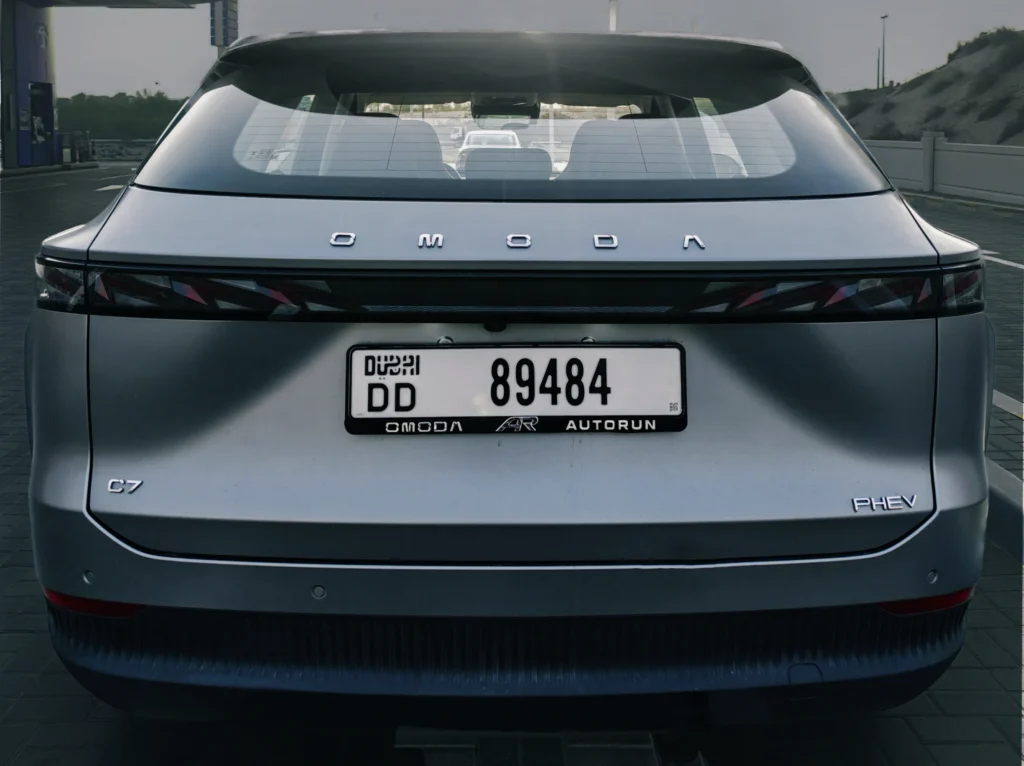
A five-seat plug-in hybrid SUV. A 1.5-liter turbo petrol engine works with an electric motor through a dedicated hybrid transmission, fed by an 18.4 kWh battery. It runs 4,660 mm long on a 2,720 mm wheelbase and weighs about 1,855 kg empty. Wheels are 19 or 20 inches depending on trim, and the UAE car I drove wore the 20s.
UAE pricing opens at AED 88,900 (about USD 24,200) for the base petrol car. The SHS Flagship I drove lists at AED 114,900, roughly USD 31,300.
UAE listings suggest the SHS will have around 340 hp on output. Other global material quotes about 255 kw and 525 nm. Omoda doesn’t publish an official zero to 100 km/h claim I could find. It doesn’t matter in practice. I never felt underpowered and never had to plan to merge on the highway or find a gap in city traffic.
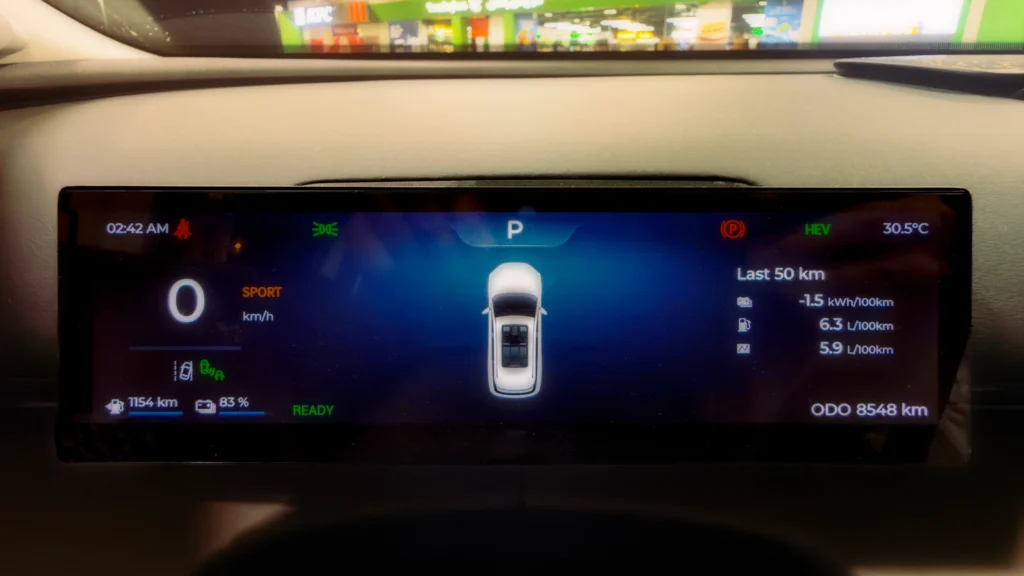
Omoda quotes 95 km of electric range in its UAE material, 105 km on the WLTC cycle, combined range up to 1,250 km, and consumption as low as 4.7 L/100 km. Over 15 days, I saw 70 to 75 km of usable EV range on a full charge and about 5.3 L/100 km once the battery ran down. The gap is Sport mode. By day four, I was driving in Sport for most of the week, and Sport drains the battery faster in exchange for sharper throttle response and quicker steering weight. Drive in Eco or Normal, and the claimed 95 km would likely show up.
The cabin
The centerpiece is a 15.6-inch screen that slides on its mount, with a digital cluster beside it and a Sony system that puts speakers in the front headrests. The Flagship trim adds heated and ventilated front seats, a massage function for the passenger, a panoramic roof, acoustic laminated front glass, and a 540-degree camera.
What’s more, the car even offers a fragrance system: three perfume cartridges sit beneath the center stack, selected and controlled through the central screen. It is hardly essential, but after two weeks in August traffic with the air conditioning working flat out, I understood the appeal
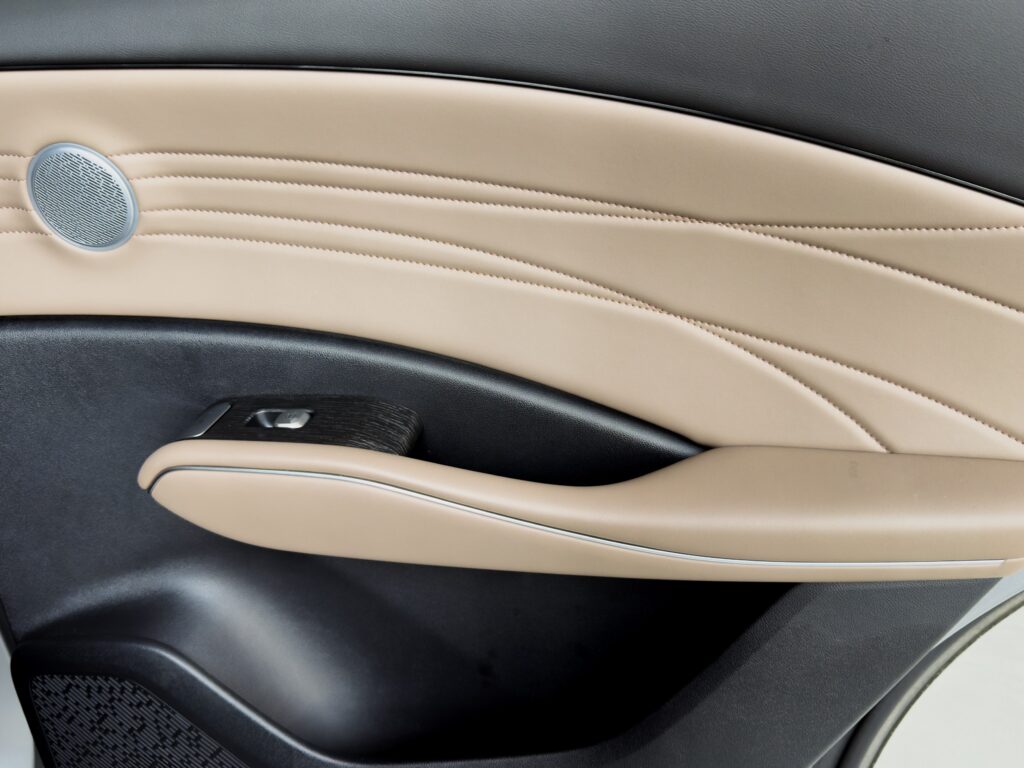
The cabin is the best thing about this car, and I want to be precise about how far that goes. At AED 114,900, I expected something to give the game away. A scratchy panel behind the seat, a switch that felt hollow, a plastic seam that did not line up. I spent two weeks looking and did not find one.
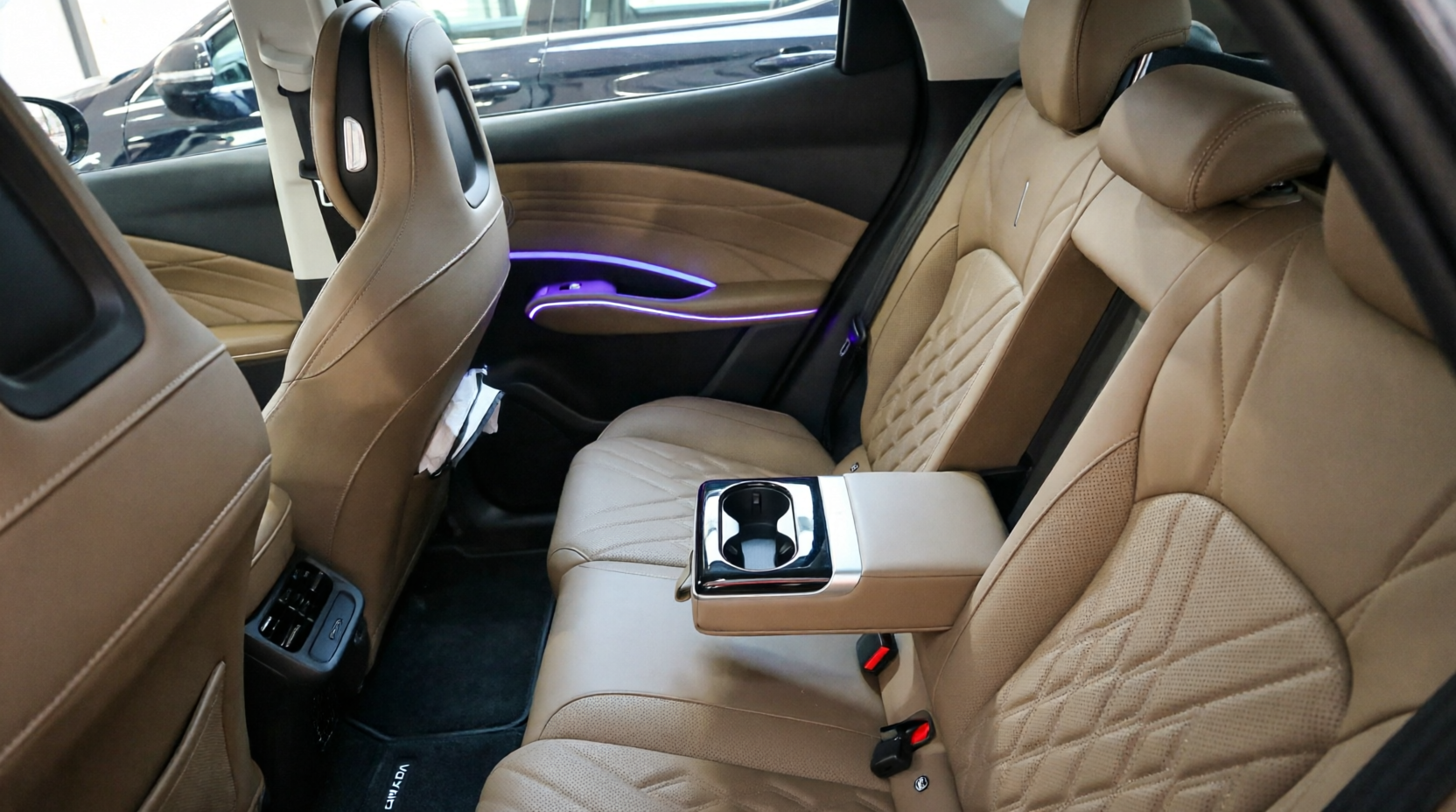
Everything falls where your hand expects it, which is harder to engineer than it sounds. The material quality holds in the places nobody photographs, including the lower door cards and the underside of the console lid. The doors are pretty solid and shut with a weight that belongs to a more expensive car, and you notice it every single time across 15 days. The seats are the best I have sat in for this money. I got out at the Abu Dhabi end of a two-hour run without doing the stretch I normally do.
The camera lives up to its name. Some multi-level car parks were built to a Yaris standard. The overhead view with the wheel-edge angle turned the tighter mall spaces into a non-event.
The star of the show, though, was the sliding screen. Every passenger who took the front seat got the same routine from me: four fingers flat on the edge of the display, a shove sideways towards them, and “here you go, play some games if you’re bored.” It landed every time. It is also useful in a way I did not expect, because the passenger beside you can become a real co-pilot!
My one frustration is not Omoda’s alone. There are no physical buttons. I wrote about this last week after Mercedes-Benz signaled it is walking the idea back, and I hope the rest of the industry is reading.
Changing the cabin temperature at 120 km/h means looking away from the road to hit a target the size of a stamp. Setting the side mirrors needs the central screen and the steering wheel buttons working together, for a job one switch within the reach of your left hand has always done alone. Come on, Omoda.
Living with a family in it
Space is not an issue. Three adults across the back to Abu Dhabi and no complaints, helped by a flat floor and a rear bench with a real recline. Five seats is the limit; there is no third row.
The boot is big enough for real family use. With all five seats up, you get around 590 to 600 liters, which is stroller and luggage territory rather than two soft bags and a hope. Fold the rear bench, and the load bay turns properly flat. The floor sits low enough that a child’s bicycle or a big weekly shop slides straight in without a wrestling match.
Fitting a child seat is straightforward. The ISOFIX anchor points are easy to reach and sit clear of the upholstery, and the rear doors open wide enough that you are not threading a toddler through a narrow gap. For a car that will spend its life on school runs and weekend trips, that matters as much as the massage function in the front seats.
How it drives
The suspension is firmer than most buyers in this segment expect. It keeps the body nicely in check on smooth highways, but it can feel sharp over patched city tarmac, especially on the big wheels.
On Sheikh Zayed Road and the E11, it sits flat through the long sweepers and stays composed at 120 km/h with a full car and the air conditioning working hard. On the patched sections inside Dubai and Sharjah, it thumps. You hear the impact through the structure before you feel it in the seat, which is the signature of a car tuned on smoother roads and fitted with 20-inch wheels afterwards.
On the highway, the equipment takes over. The feature I used most is the speed limiter buried in the cruise control setup: set a ceiling, drive normally, and the car will not take you past it. On a road where the cameras are the cameras, that beats adaptive cruise for daily usefulness. I first drove a car with one about 15 years ago, a Renault, and I have wondered ever since why every manufacturer does not fit one as standard. It also solves the car’s most irritating habit, because you stop triggering the overspeed chime altogether.
In the city, the C7 is the one I would take over the J8. At 4.66 meters, it gives up real length to its bigger sibling, and you feel that every time the traffic stops moving. It moves off smoothly, and it will take a gap that is closing. Most of those 15 days were at 40-80 km/h, and that is exactly where this car is happiest.
Sport is my favorite drive mode, and by day four it was the only one I was using. The throttle sharpens, the steering picks up weight, and the hybrid system stops being polite about how quickly it hands you the electric motor. Sport also drains the battery fast, and my consumption figure is the figure of a man who spent two weeks ignoring the efficient option.
The driver aids are where my patience was put to the test. Lane keeping in its default setting tugs at the wheel on roads where the markings have faded, which describes half of Al Nahda. You can turn both the lane assist and the speed warning down or off, and both reset themselves more often than they should. This is now my most frequent complaint about Chinese cars sold here. It is a software problem, which means somebody could fix it in an update.
The hybrid system is the engineering I respect most. On electricity, the C7 leaves a standstill with no lag and no noise, which changes what stop-start traffic feels like. When the engine joins, it does so without drama, though push hard and you hear it working before you feel much extra pace. I never once had to plan a merge onto the highway from a short slip road.
Safety
The kit list is serious. Gulf-spec cars carry seven airbags, including a center airbag between the front seats, and a radar-based driver assistance suite that runs to more than twenty functions. Adaptive cruise control, automatic emergency braking, blind spot and cross traffic alerts, and traffic jam assist are all in there, as well as a 540‑degree camera and dashcam.
What is missing is an independent verdict. No crash agency has published a rating for the C7, unlike its bigger Omoda C9 cousin, so the hardware is all you can judge it on for now. On that measure, it is at least level with what the established Japanese and Korean brands offer at this money.
Who should buy it
At AED 114,900, the C7 SHS undercuts the entry point of most European compact SUVs before those cars are optioned anywhere near this equipment level. The cabin is the argument. Sit in one, close the door, and run your hand along the lower dash, and you will start looking for what has been left out. Nothing obvious has.
Sit in it after a Qashqai, Sportage, or Tucson, and the difference is plain. The seats do more, the screens are larger and finer, and the materials where your hand lands feel closer to what the European brands reserve for their higher trims.
Against the Japanese and Korean competition, it trades resale confidence and 20 years of local service history for a better interior, more seat function, and a plug. Three years ago that trade was not close. It is now.
Buy it if you have somewhere to charge, drive mostly inside the city, and can live with somewhat firm suspension.
Two things to do before you sign. Take the test drive over some imperfect side roads rather than around the dealership block. And feel the power, the handling, the braking, and everything else for yourself. That’s my advice all the time, for any car.
The C7 does not win because it is perfect. The ride is firmer than it needs to be, some of the driver-assistance settings need local calibration, and too much of the everyday stuff still lives on a screen. But it gets the things that matter to a family right: the cabin, the seats, the space, the efficiency, and the way it behaves in the traffic most of us actually drive in.
I handed the keys back, and it was harder than it should have been. The car I nearly wrote off on a Monday evening was the one I did not want to give up on Friday.
The J8 made me look at Chinese cars differently. The C7 is the first one I would put my own family in without adding a qualifier.